
help bg

Keats Blog

Keats Blog offers great information about Chinese language learning, Chinese culture, Mandarin Chinese, and information about China.
Go Back

Clothing and Adornment

Clothing and Adornment

Over the course of its long history, China has produced a spectacularly diverse and exquisite range of clothing and accessories, occupying a special place in the pantheon of worldwide fashion culture. Learn Chinese traditional clothing, you can immersing in Chinese culture.

Clothing

Chinese headwear mainly consists of hats or caps, and earrings and hairpins generally worn by women.

Hats worn by the Han people tend to be simple and practical, worn to protect the wearer from the coldness, sunshine or rain. For a number of ethnic minority groups, however, hats are worn more for decorative than functional reasons. With some ethnic minority groups hats have even become synonymous with their culture. In some parts of China, people are used to wearing kerchiefs instead of hats. Earrings are also a common accessory for women, rarely worn by men. Earrings worn by the Han women are usually of a simple design, whereas traditional earrings worn by women from ethnic minority groups come in all shapes and colors. Yunnan has 36 ethnic people, and you can experience different ethnic tradition when you learn Chinese in Yunnan.

Hairpins are mainly used to hold hair up. They are usually made of metal, jade and so on.

Shoes

In China, there are various types of shoes, and the materials used to make them also vary widely, including leather, cloth, plastics, straw and hemp. The materials used have much to do with ethnic customs and local climates. For example, leather boots and felt boots are very common in the coldest regions in Northwest and Northeast China. Traditional handmade cloth shoes are comfortable, and some are beautifully crafted, with intricate patterns stitched on the outside, and they can be regarded as exquisite artifacts.

Do you know?

The traditional costumes of the Han people in China (mainly worn by the Han people from ancient times to the start of the Qing Dynasty) are now collectively called hanfu (meaning “clothing of the Han”). Its main characteristics are the Y-shaped cross collar, the right lapel (the left part of the collar crossing over the right one), the sash and so on. There are various traditional costumes in Chinese culture, and you may learn more if you attend this immersive mandarin course.

Earrings
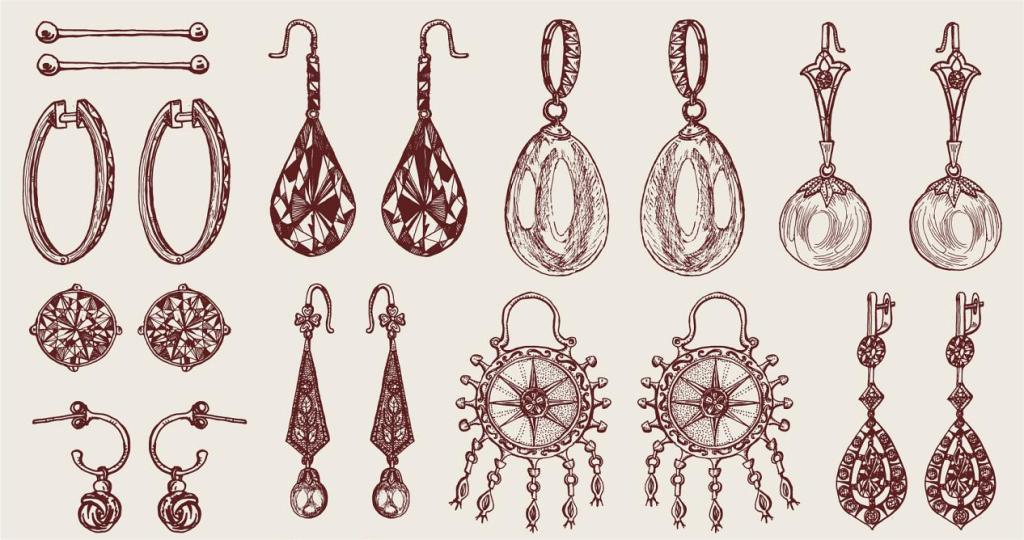
Earrings are a common accessory and people wear different ones from time to time. However, among some ethnic minority groups in China, there are different customs for the wearing of earrings. The Yao people, for example, will not remove their earrings once they put them on.

Clogs

In ancient China, people were used to wearing clogs, i.e. Wooden shoes. It is said that Confucius’ clogs were as long as one chi and four cun (about one foot and five inches). Of course, this is measured according to the length unit of ancient China (Ancient chi is a little shorter than the contemperary chi).

 

Related Articles

Which Chinese Language Program
is right for you?

PROGRAMS

Rients's Story at Keats Kunming, My Second Hometown

OVER 7300+ STUDENTS HAVE STUDIED AT KEATS

Ivo

Ivo | Switzerland

Intensive One-on-One Chinese Classes

They really care about what our interests are, what questions we have, what requirements we have. Then they adjust our Chinese language program content according to the situations. One teacher and one student, so it is easy to keep your focus for the 6 hours of immersion Mandarin lessons. It is very convenient to study, live and eat in one building.

Faith

Faith | UK

Intensive One-on-One Chinese Classes

I have 2 teachers, and I do 4 hours a day. So I have got Dong Laoshi and Jin Laoshi. Both of them are very good. They made the experience very nice to me. They are willing to help you whenever, so if you ever have a question here, the teachers are always there to help you whether it is visas, whether it is getting around the city. Everyone wants to talk to you.

Sarah

Sarah | USA

Intensive One-on-One Chinese Classes

My name is Sarah Fish. I am 81. I knew very little Chinese when I arrived. How was I going to survive 2 weeks of intensive Chinese course? I have to laugh when I think of that now. What a positive experience this has been! I really wish we could be here a little longer. The teachers are extremely encouraging, evaluating first how much someone knows, and then starting from there.

杜文宇

杜文宇 | Netherlands

Intensive One-on-One Chinese Classes

So during my first week at Keats, I didn’t dare to speak any Chinese words. I found out that my Chinese level quickly improved since then. Although I have many options to study in China, for example, some other schools have homestay, I found I could immerse myself and fully focus on learning Chinese by staying at Keats.

Pakorn

Pakorn | Thailand

Small Group Chinese Class

It is very convenient to come to Kunming from Thailand. I really like my Chinese class and my Chinese improved a lot in a few months. There are many benefits of learning Chinese. The best thing I like about Keats is that it is in Kunming, a city with eternal spring. There is so much to see in Kunming and you will love this city after you come.

Paul

Paul | UK

Intensive One-on-One Chinese Classes

All teachers are really lovely. The teaching level at Keats is so much higher. I really love the city. It is very comfortable to get around. I fully recommend Keats. It is a great place to study Chinese in China. We are looking forward to coming back again later this year.

Nicholas

Nicholas | Canada

Intensive One-on-One Chinese Classes

At Keats, I have a lot of opportunities to practice what I have learned. I really like this school, because I can learn Chinese in one-on-one style, so I think this is the best immersion program in China and my teacher is the best teacher. I feel that without my teacher, my Chinese will definitely not improve so much. I’m very happy because, at Keats, I have improved my Chinese significantly.

Sylvia

Sylvia | USA

Intensive One-on-One Chinese Classes

One thing I really liked was that I was able to work with my teacher to make an individual plan of study. Another really nice thing is that you live at the school, you feel completely safe.  You always have a group of people who are willing to do things with you on the weekends or in the evenings. They are serving you all the 3 meals a day, the food was excellent.

Please use vertical scrolling on your mobile device.