This is China: Essential Aspects of Chinese Culture
Contents
A Brief History
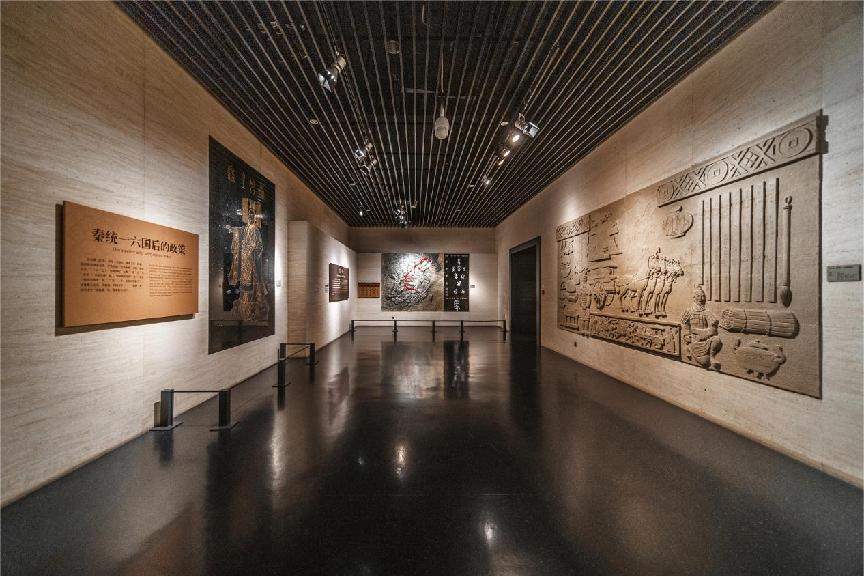
As one of the four great ancient civilizations, China is a nation with a civilization history of about 5,000 years. Its first dynasty, the Xia Dynasty (c. 2070 BC–1600BC), was established about 4,100 years ago. It has gone through several historical stages: primitive society, slave society, feudal society, and semi-colonial and semi-feudal society, before the People’s Republic of China was founded on October 1, 1949. If you want to learn more details about the history of China, Keats provides a blog for you

Population


China has the largest population in the world. According to statistics, China’s population was 1.395 billion at the end of 2018. China’s population is very unevenly distributed. The eastern coastal area is densely populated and the western plateau area is sparsely populated. The population density reaches over 500 people per square kilometer in some provinces such as Jiangsu, Shandong and Taiwan, While in the provinces and autonomous regions like Inner Mongolia, Xinjiang, Qinghai and Tibet, there are fewer than 50 people per square kilometer.
Size


Covering a land area of approximately 9.6 million square kilometers, China is the world’s third largest country after Russia and Canada. China measures approximately 5.500 kilometers north-south and 5.200 kilometers east-west–China’s northernmost point is at the center of the main shipping channel of the Heilongjiang River, north of Mohe County, and its southernmost point is at Zengmu’ansha in the Nansha Islands; its easternmost point is at the confluence of the main shipping channels’ central lines of the Heilongjiang River and the Wusuli River, and its westernmost point is on the Pamirs. There are some wonderful cities for you to learn Chinese in China.
Ethnic Groups and Religions
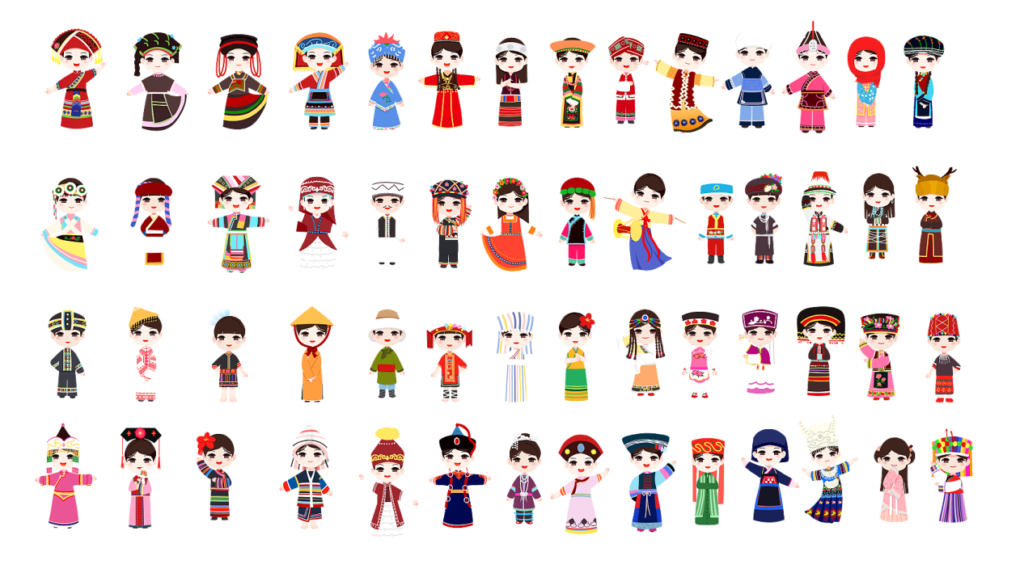

As a large, united multiethnic state, China is composed of 56 ethnic groups. Some ethnic minority groups each have a population of more than one million. They are Zhuang, Hui, Uygur, Yi, Miao, Manchu, Mongol, Tibetan, Tujia, Bouyei, Korean, etc. China respects and protects the freedom of religious belief. Some Chinese inhabitants respectively believe in Buddhism, Taoism, Islam, Catholicism, Christianism (Protestantism), etc.
Language and Writing
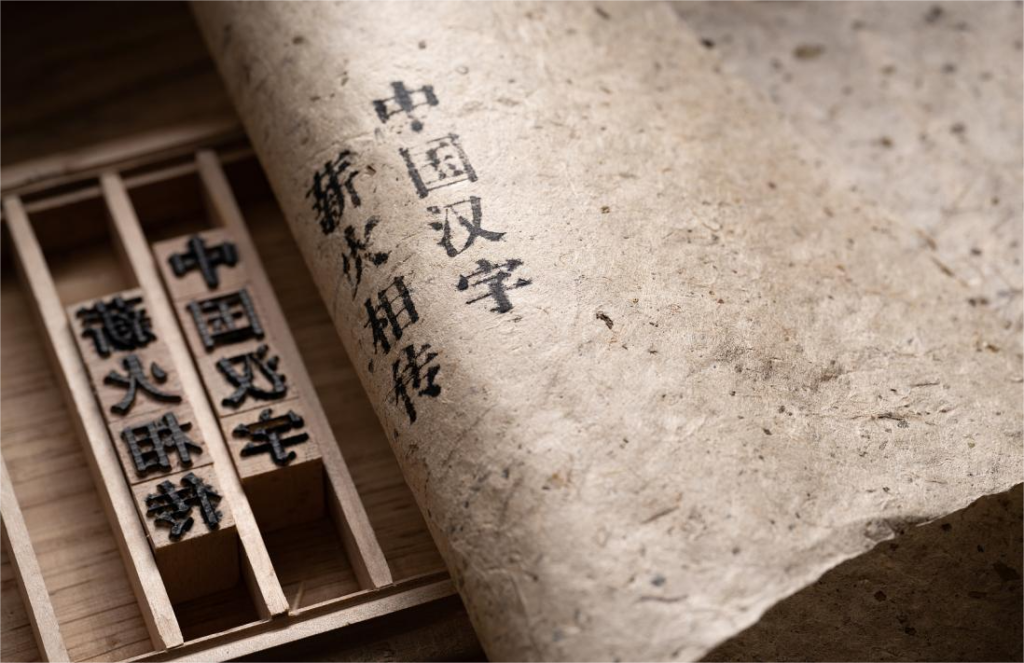

The Chinese language is the language of the Han people, and the common language of modern Han people putonghua (Mandarin Chinese)-is China’ universal and official language. Simplified Chinese characters are China’s universal and official written language. If you want to learn Chinese in China, Keats, a famous Chinese language founded in 2004, should be your top choice. Due to historical and geographical factors, a variety of dialects exist in the Chinese language. The dialects are regionally different. The major difference between them lies in pronunciation although there are a few differences in vocabulary and grammar. In spite of this, the written language is unified. The seven major dialects of modern Chinese language are as follows: the Northern dialect, Wu dialect, Xiang dialect, Gan dialect, Hakka dialect, Min dialect and Cantonese dialect. Although there are mang dialects in China, Mandarin is still the one most commonly used. Keats provides a blog for you to learn to speak Mandarin in 30 days.
Administrative Divisions
China is made up of 34 provincial-level administrative regions, including 23 provinces, five autonomous regions, four municipalities directly under the central government and two special administrative regions. Among these 34 provinces in China, there are a large number of places for you to travel.
Terrain


The vast complex and diverse land expanses of China include plains, foothills, plateaus and basins. The land of China descends from west to east in three steps. The highest place is the Qinghai-Tibet Plateau with an average elevation of more than 4,000 meters, which is known as “the Roof of the World’. Mount Qomolangma, the summit of the Himalayas, also the Earth’s highest peak, is 8,848.86 meters above sea level. Among such vast terrain, what are some amazing places to visit?
Climate


Most parts of China are located in temperate and subtropical zones. Some regions in the south are located in the tropical zone while those in the north are close to the frigid zone. The Qinghai-Tibet Plateau has a plateau-mountain climate. Kunming has one of the best climates in China. It is neither too hot nor too cold in winter. Therefore, when considering to study Chinese in China, learning Chinese in Kunming is a great option.
Across from southeast to northwest, the regions of China can be categorized into four different types based on humidity levels, including humid, sub-humid, sub-arid, and arid zones. The average annual precipitation varies greatly in different regions of China and gradually decreases trom southeast to northwest. It can reach above 1,500 mm in the southeastern coastal areas while it can be below 200 mm in most northwestern inland areas.
Rivers, Lakes and Seas


There are a large number of rivers in China, many of which are long rivers. With a length of approximately 6,397 kilometers, the Changjiang (Yangtze) River is the longest in China and the third longest river in the world. With a length of approximately 5,464 kilometers, the Yellow River is the second longest river in China. The Yellow River basin was an important birthplace of ancient Chinese civilization, and it is referred to as the cradle of the Chinese nation, so it is honored as “Mother River” by the Chinese. With a length of about 1,797 kilometers, the famous Grand Canal from Beijing to Hangzhou is the longest ancient canal and the biggest project of its kind in the world.


There are also a lot of lakes in China. The largest freshwater lake is Poyang Lake, with an area of approximately 3,150 square kilometers at its average water level China’s largest saltwater lake is Qinghai Lake, which covers an area of about 4,583 square kilometers. Apart from these varies rivers and lakes, there are still many beautiful destination for you to go. If you want to find a best suitable city to learn Chinese, learn Chinese in Kunming is the top choice for you. you can browse this blog for more details.
China’s coastal waters, from north to south, are named as the Bohai Sea (enclosed within the Bohai Bay), the Yellow Sea, the East Sea and the South China Sea.
Did you know:
The national flag of the People’s Republic of China is the Five-Starred Red Flag. The flag is rectangular, with a length-width ratio of three to two. The five stars and their interrelation represent the great unity of the Chinese people of all ethnic groups under the leadership of the Communist Party of China.
To know more:
The implication of “China”
In ancient China, the meaning of “国” (guó) was “State”, and “中国” (Zhöngguó) meant the “central state”. “Zhonghua” and “Huaxia” were also used to refer to China in history. Today, China is used as the short form of the People’s Republic of China.
One Country, Two Systems
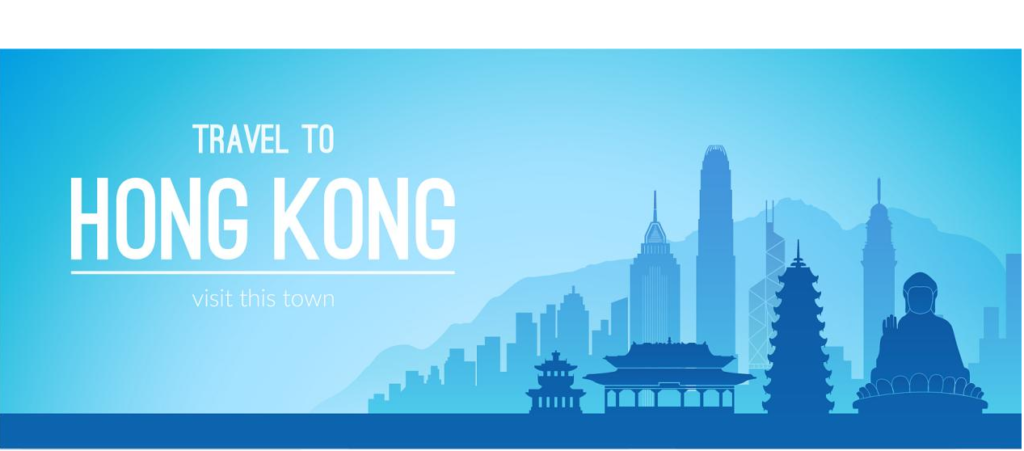

The concept of “one country, two systems” is a constitutional principle formulated by Deng Xiaoping, for the reunification of China. It was first proposed for the purpose of solving the Taiwan question, and then it was adopted for Hong Kong’s and Macao’s return to China.
Special Administrative Regions
There are now two Special Administrative Regions in China, namely, Hong Kong Special Administrative Region and Macao Special Administrative Region, which were founded on July 1, 1997 and December 20, 1999 respectively.
Related Articles

Travel in Yunnan – Everything You Need to Know


A Complete Guide to the Jingmai Tea Mountain


Clothing and Adornment


Which Chinese Language Program
is right for you?
OVER 7000+ STUDENTS
HAVE STUDIED AT KEATS
Listening and speaking in the classroom every day has improved my communication skills. After three weeks, my new words and sentences became more and more natural and fluent. Now I am used to thinking in Chinese, and I understand better what other people say, to be able to have real conversations with other people.
I’ve been at Keats school and Kunming now for one month doing the one-on-one Chinese lessons with two different teachers. I really enjoy it. Both of my teachers are very friendly and patient. They really helped me to improve my Chinese, both of my reading and speaking. I really enjoy studying Chinese in Kunming as well. This city is really beautiful and the weather is nice, the air is clean. It’s one of the best cities in China to study Chinese.
My first semester that I studied at another school, and the pressure there was pretty high, the classroom hour was long, and the homework was pretty tedious. Since I came to Keats, I found I have a lot more opportunities to speak in the classroom. My classmates all are fluent and love speaking and participating in the class. We have great classroom dynamic.
I come to Kunming because I think the environment in Kunming is better and I heard that Keats School is better. I like the small group Chinese class because my classmates study hard and our teachers are very good. I like the teaching method of Keats because I like the activities at Keats. I think Yunnan is a particularly beautiful Chinese province.
My school is amazing. I recommend Keats School because it is a more convenient way to learn Chinese in Kunming.
My teachers are all excellent. They trained the teachers so professionally. I feel like I learn very quickly with my teacher. They are very serious about their students and I know every teacher is like this. I would highly recommend that you come to Keats if you are looking for the best Chinese school in China.
Before I came to Keats School, I had no confidence in my Chinese proficiency. I did not have the confidence to speak Mandarin Chinese and chat with Chinese people. However, after 4 months of study at Keats, I become more and more confident in speaking Chinese now. Studying Chinese in China at Keats School has been the best decision I have ever made. There are many games in the class, and my teacher’s teaching methods are also very interesting. My experience at Keats School has changed my view of China and Chinese people.
So during my first week at Keats, I didn’t dare to speak any Chinese words. I found out that my Chinese level quickly improved since then. Although I have many options to study in China, for example, some other schools have homestay, I found I could immerse myself and fully focus on learning Chinese by staying at Keats.