The Best Resources to learn Chinese Vocabulary
Contents
These days, students learning Chinese vocabulary are spoiled for choice. But with so many resources to choose from, how do you choose? I’ve listed the most popular options in this article and some meaningful directions on when to deploy them.
Spaced repetition apps (like Hack Chinese or Anki)
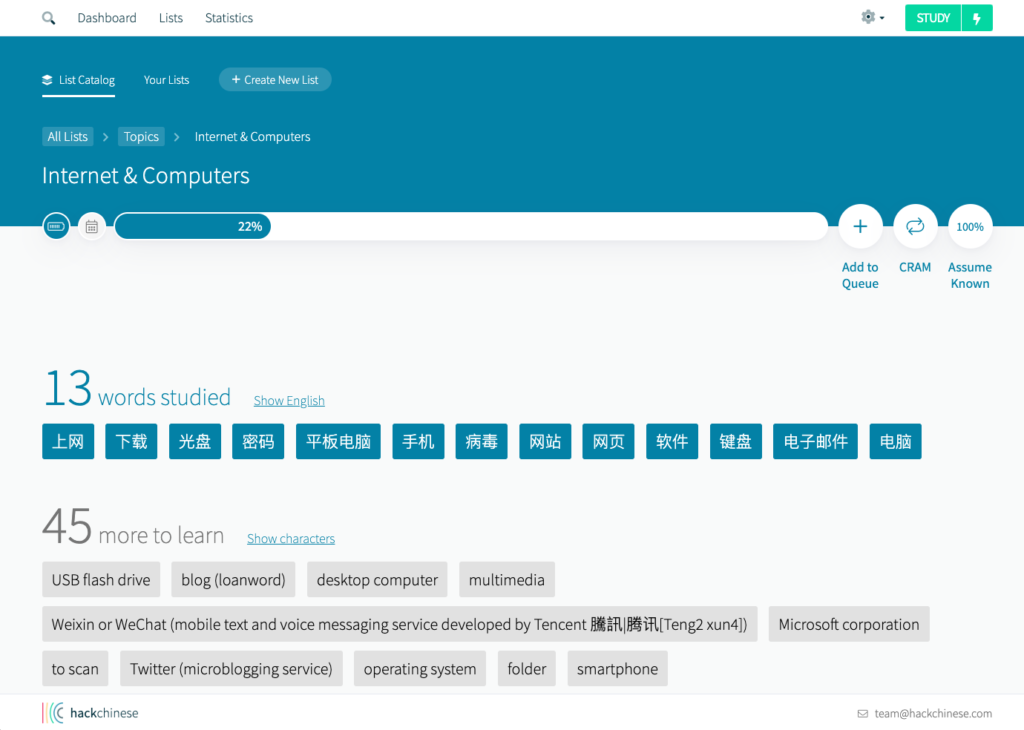

Language learners everywhere supplement their vocabulary learning with spaced repetition apps because their efficiency is virtually impossible to beat. Every word you learn is tracked and then reviewed precisely when you’re at risk of forgetting.
Your review performance is tracked, too, so you’ll see your “hard” words more often and your “easy” words less frequently.
A common misunderstanding with spaced repetition is that you’ll spend too much time reviewing. Yet the reality is the precise opposite: you spend the least possible amount of time to keep your memories strong (by avoiding “forgetting” as much as possible).
When you offload your vocabulary learning to spaced repetition, you can move on to higher-quality learning activities (like conversation practice with a tutor), all the while being confident that you remember all the vocabulary you’ve learned.
Two popular spaced repetition apps are Anki (which can be used to study anything) and Hack Chinese (designed specifically for learning Chinese).
Textbooks
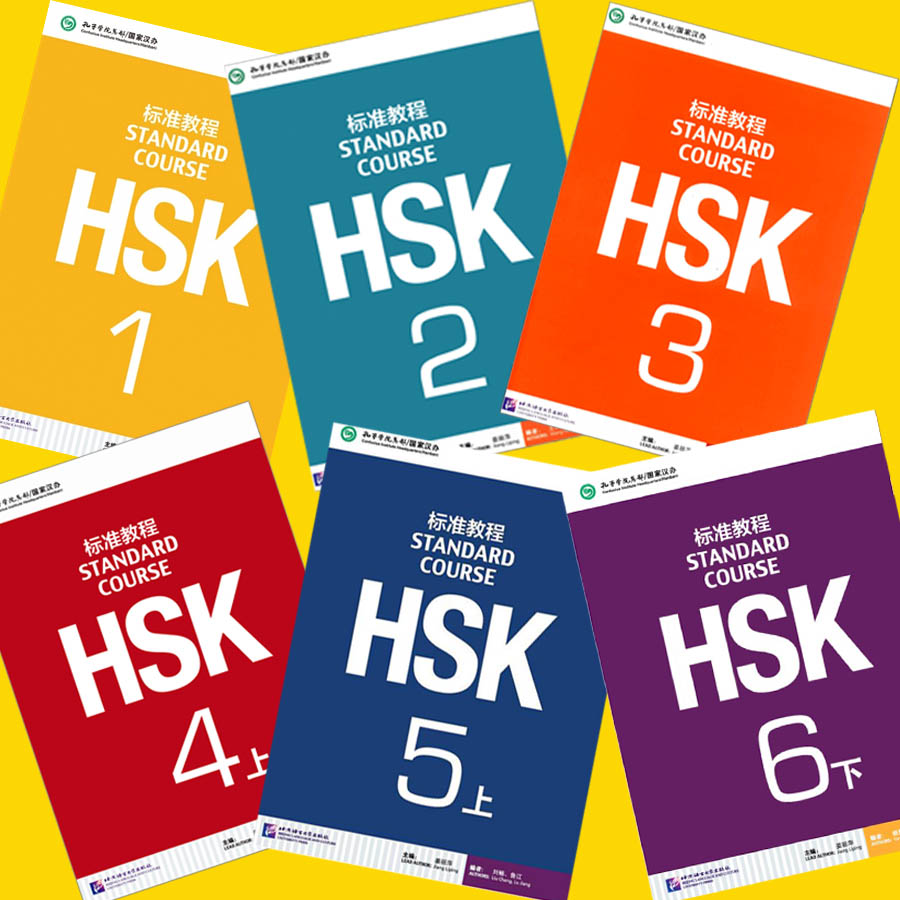

Old-school textbooks offer so many advantages that most students shouldn’t skip them, even if they choose to use digital learning platforms, too.
First, they grow your vocabulary systematically by introducing increasingly difficult words at a manageable pace. This systematic expansion of vocabulary helps students cover large areas of knowledge like the HSK (China’s official Chinese proficiency exam).
Second, they come with built-in practice in the form of dialogues to read (and listen to) and exercises to do.
Third, they repeat the most frequently used words, giving you another form of ‘repetition’ in a more natural context.
Chinese lessons with a teacher


If you want to speak Chinese, at some point, you’ll need to take classes (or even better: a 1:1 tutor).
Assuming you find a high-quality teacher (like one from Keats school), you’re in for some of your highest-value learning time.
But remember: teacher time is (relatively) expensive, so make sure you use this time to tackle your most difficult challenges: conversation practice, role-playing, asking questions, etc.
If your teacher is just teaching you vocabulary, well, you aren’t extracting as much value as you could be. (I often say that paying a teacher to teach you vocabulary is like paying a dentist to brush your teeth!)
Full-service learning apps


Duolingo, ChineseSkill, Hello Chinese, and others are excellent ways to dip your toes into the water and find out if you really like Chinese.
But you should know that their curriculums max out somewhere at the ‘advanced beginner’ stage. Despite having course titles like ‘Advanced Chinese,’ you shouldn’t expect to reach beyond HSK 3 or HSK 4.
Also, keep in mind that these apps give you a lot of knowledge, but you’ll definitely need to supplement your learning with 1:1 tutoring to get speaking practice.
YouTube Videos


There are a few things to like about YouTube videos for learning vocabulary. The teacher will usually use the word in context and explain some of the nuances for its usage. If you subscribe to these feeds, you can throw a few meaningful videos into your binge TV-watching sessions and be a little bit wiser without much effort.
Be careful not to assume you can learn everything from YouTube videos, however. Your learning speed will be relatively slow, you don’t have a way to get feedback on any practice you do, and you won’t have much control over what you learn.
Instagram / Twitter / LinkedIn feeds
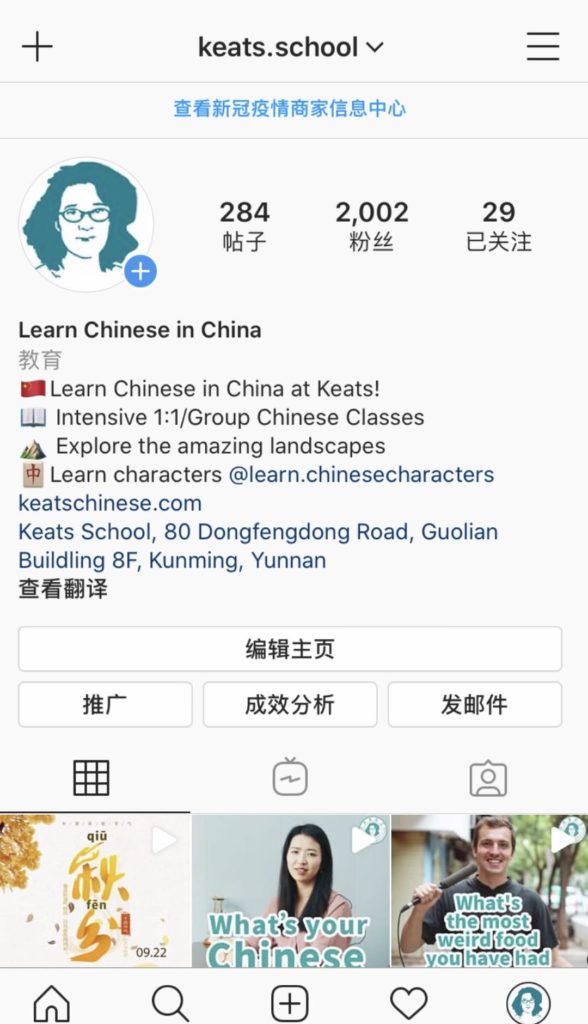

Posts on these micro platforms are like YouTube “light,” with many of the same advantages and disadvantages. These “micro-lessons” can be easily absorbed throughout your day, and for that reason, are wonderful supplements to your overall learning plan.
But they should be just that: supplements. If you want to really make forward progress and actually achieve a high level of proficiency, you’ll absolutely need to reach for more comprehensive tools like spaced repetition apps or 1:1 lessons with a teacher.
Podcasts like ChinesePod or PopupChinese
Podcasts are bite-sized audio-only lessons you can consume at your own pace. They are replayable and portable (many people find it easier to slip audio podcasts into their morning commute than watching videos). They have lots of structure to make sure you cover large amounts of vocabulary (like an entire HSK level). If you aren’t using these yet, you should be.
Physical Dictionaries / Picture Dictionaries
Pretty covers can be enticing, but what is the plan, you’re going to read the dictionary? These are bulky and close to useless when it comes to learning Chinese vocabulary. Dictionaries are references, not learning materials. Avoid them and save your money for any of the more useful resources above.
Author:
Daniel Nalesnik, Founder of Hack Chinese
Daniel moved to China in 2009 for a year of full-time Mandarin immersion at Peking University (in Beijing) and Fudan University (in Shanghai). In the years since he has worked with teachers throughout China to discover what learning methods are most impactful for Mandarin Chinese learners. This experience inspired Daniel to found Hack Chinese, a spaced-repetition platform for learning Mandarin Chinese.
Related Articles


Travel in Yunnan – Everything You Need to Know


Learn Chinese in Beijing


Learn Chinese in Chengdu


Which Chinese Language Program
is right for you?
OVER 7000+ STUDENTS
HAVE STUDIED AT KEATS
So during my first week at Keats, I didn’t dare to speak any Chinese words. I found out that my Chinese level quickly improved since then. Although I have many options to study in China, for example, some other schools have homestay, I found I could immerse myself and fully focus on learning Chinese by staying at Keats.
I really enjoy studying Chinese in Kunming at Keats. The teachers are great and my classmates are awesome. It is an unforgettable experience for me. I also got the chance to travel to other places in Yunnan. Those places are amazing and you definitely need to visit these places when you study Chinese in China at Keats.
All my classmates stay together for one year and we improved so much! The teachers at Keats are all very great. They like to organize a lot of activities to help us learn Chinese. I like Keats! I like Kunming!
I found Keats School and I am so glad that I did. When you learn Chinese in China at Keats, you are fully being taken care of. My teacher is really great and we become lovely friends.
This is my second time coming. Last year, I also came for about 12 weeks. This time I came for 13 weeks of a summer program in China. The reason why I particularly want to come to this school was because of the one-on-one classes. I was able to increase my level and learn Chinese more quickly than in group classes. If I have a chance again to come next year, I certainly will.
I’ve had an amazing time at Keats. I am amazed at how much I’ve learned over the last 3 weeks and I will be really sad to go. We are already planning on our next trip of coming back because we had such a fantastic time here. They really tailor the Chinese language course to you and your individual needs.
In the one-to-one intensive Chinese course, you can choose the learning method you like. The small group Chinese class in China at Keats follows the HSK textbook. Teachers often collect feedback from the students, teachers listen to our requirements and opinions. I felt that my oral level is better than before .
Kunming is a fantastic city. The weather here is great. The school is excellent. The instructors are very helpful, very friendly. I strongly recommend that anybody who is looking for a Chinese language school in China come here to study. Kunming and Keats school are much better than any other place.